
- Version
- 0.7.2963 Native
- Studio or maker
- Lion Shield
- Languages
- Russian, English, German, Hungarian, Spanish, Italian, Chinese (Traditional), Chinese (Simplified), Korean, Polish, Portuguese, Turkish, Ukrainian, French, Czech, Japanese
- Activation
- DRM-free
- Chip type
- Apple Silicon, Intel 64-bit
- Tried out on
- macOS Tahoe, Mac mini 2024 M4
- First released
- 26.03.2026
- Voice languages
- Music only
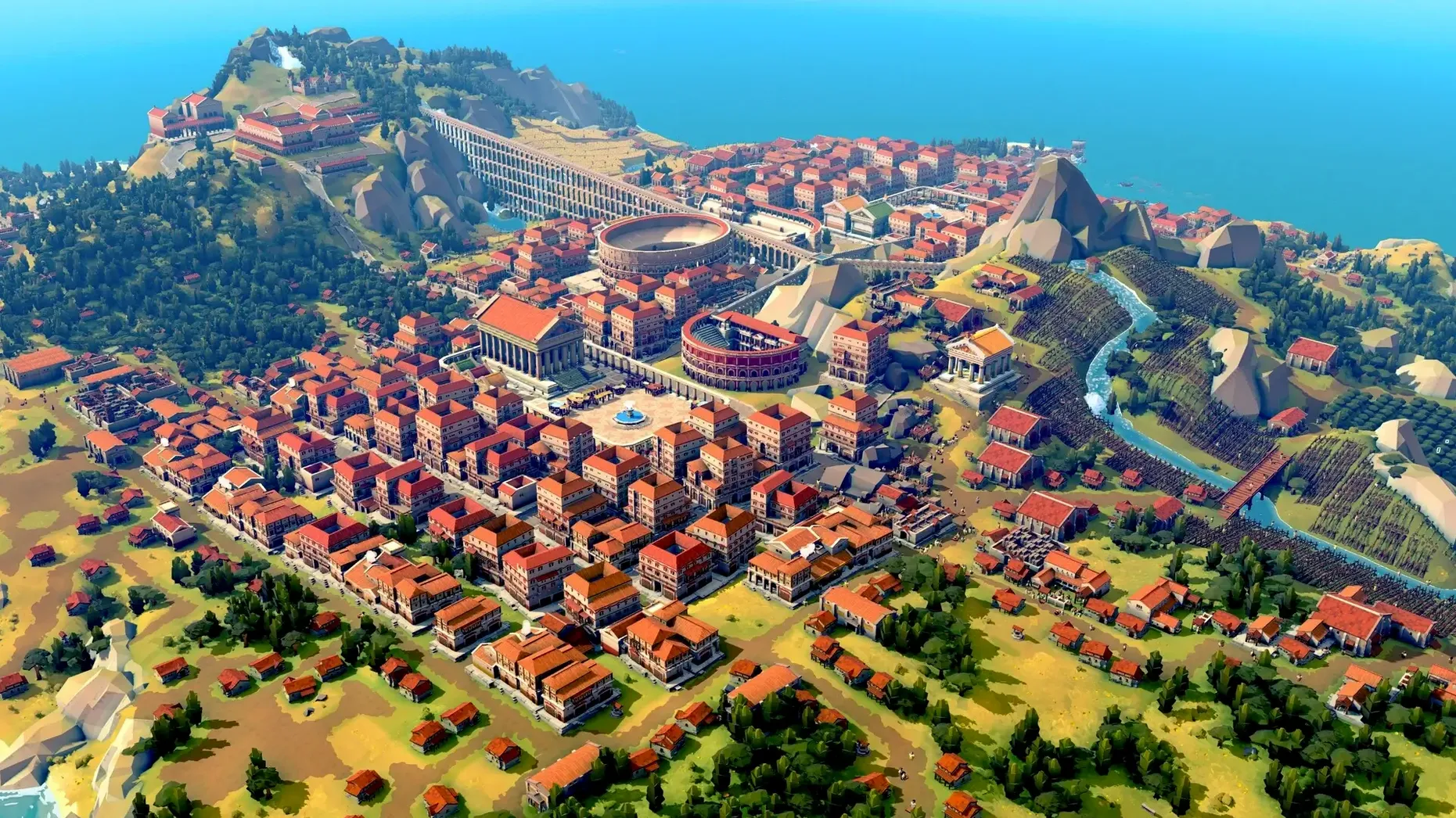
Nova Roma is a Roman city-building game about managing citizens, laws, supply chains, and divine favor.
Patience-first builders and law-and-order enthusiasts
- Patience-first city builders — You enjoy games where growth takes time and resources matter. Nova Roma tracks landscape, hydrodynamics, and weather, so planning ahead is essential.
- Law and order enthusiasts — You can enact laws, set taxes, and develop technology. The social side of running a settlement is as important as its water supply.
- God-minded builders — Building temples and keeping the gods happy adds a layer of strategy beyond pure logistics.
Why action-driven players and casual clickers should skip it
- Action-driven players — If you prefer fast-paced decisions or combat, Nova Roma is deliberate and simulation-focused. No armies to command.
- Casual clickers — Supply chains, aqueducts, and citizen needs require attention. This is not a game you play on autopilot.
From scouting terrain to managing citizen needs
You start with a handful of citizens and a patch of land that looks promising. The first few minutes go to scouting the terrain: where does the river bend, which slopes get sun, and where might flooding be a problem. I mark a spot for the first houses and a basic woodcutter, then watch my people get to work. The early game is quiet and deliberate — you place a few buildings, assign workers, and wait for resources to trickle in.
Once the first houses are up, I open the law panel. Enacting a simple tax on grain gives me a bit of coin to spend on a small temple. The gods matter from the start. I choose a deity whose favor helps with water or crops, then assign a priest. That first temple changes the mood of the city — citizens stop grumbling about divine neglect, and the game starts to feel like a real community rather than a survival exercise.
The middle session is where supply chains get interesting. My settlement needs bread and wine, which means fields, a mill, a bakery, and a vineyard. I build them in sequence, watching the flow of goods. A dry spell hits, and the river drops. That is when I realize my irrigation setup is too simple. I spend the next half hour re-routing an aqueduct and adding a small dam. Water management is not a side feature here — it drives everything.
By the end of the session, I have a growing town with gladiators training in a small arena, actors rehearsing, and craftsmen turning out goods. The gods are appeased, the laws are working, and the citizens are fed. It took planning, patience, and a few failed attempts with the water channels. That is the rhythm of Nova Roma.
Workflow: building a reliable water system from scratch
Water is the backbone of any Roman settlement, and Nova Roma makes you think about it properly. Here is a typical workflow for setting up a basic irrigation and drinking water network.
- Survey the land — Walk the map and find the highest reliable water source. A river bend with steady flow works best. Mark the elevation changes — gravity will do the work if your aqueduct is angled right.
- Place a dam — Build a small dam upstream to control the flow. This gives you a reservoir that holds water during dry weather. Position it where the river narrows so the structure uses less material.
- Run the aqueduct — Lay the aqueduct from the dam toward your settlement. Keep a steady downward slope. If the ground rises, you may need a second dam or a pump station. Check the water level indicator at each segment.
- Add distribution channels — Branch off from the main aqueduct to reach farm fields and the town square. Each branch needs its own sluice gate to control volume. I usually prioritize drinking water first, then irrigation.
- Monitor and adjust — After the system runs for a few minutes, check citizen satisfaction and crop growth. If fields are dry, open the gate a bit more. If flooding appears, close it slightly. Weather events may require further tweaks.
This process takes about fifteen minutes in real time, but the payoff is a stable water supply that supports growth for the next several hours of gameplay.
Plays well on both Intel and Apple Silicon Macs
Nova Roma suits Mac users who enjoy thoughtful, layered strategy over quick reflexes. If you have an Intel Mac from the last few years or an Apple Silicon machine, the game runs on both architectures, so upgrade cycles do not matter much. The DRM-free build means you can install it on multiple Macs in the same household without fuss — useful if you share a computer with a family member or switch between a desktop and a laptop.
Teachers and history enthusiasts will find a lot to discuss here. The game models real Roman engineering concepts: aqueduct gradients, dam placement, and the role of divine favor in daily life. I have used it in my game club as a conversation starter about Roman infrastructure and civic planning. Students pick up the supply chain logic faster than I expect, and the lack of combat keeps the focus on building.
Players who like to tinker — adjusting laws, balancing taxes, experimenting with technology paths — will feel at home. The game does not punish mistakes harshly; a failed dam or a hungry population just means you rebuild smarter. That forgiving pace makes it a strong choice for someone who wants to relax after work rather than fight for survival.
DRM-free and no internet connection required
Does it need an internet connection? No. The build is DRM-free, so once it is on your Mac, you can play offline. No launcher, no account, no updates nagging you mid-session.
Can I play it on an older Intel Mac? Yes, the game supports both Apple Silicon and Intel 64-bit architecture. I tested it on a Mac mini with the M4 chip, but the build is compiled for both. If your Intel Mac runs macOS Tahoe or later, it should work. Check the system requirements before installing.
How long does a typical game last? That depends on your pace. A single settlement can take anywhere from five to twenty hours, depending on how much you refine your laws, water system, and economy. There is no fixed campaign length — you build until you are satisfied or the city collapses under its own complexity.
Is it translated into many languages? Yes. The game supports 15 languages, including English, German, Spanish, French, Italian, Polish, Portuguese, Turkish, Ukrainian, Czech, Hungarian, Korean, Japanese, and both traditional and simplified Chinese. The music is the same across all versions, and there are no spoken lines. Language learners in my game club pick the German version and read the law descriptions as practice.
Do I need to know Roman history to enjoy it? Not at all. The game teaches you through play. You learn that aqueducts need a slope and that the gods appreciate temples, but you do not need a history degree to build a functioning settlement. The historical details are a bonus, not a barrier.
- macOS version not specified by developer
- Architecture: both Intel and Apple Silicon
Questions I keep getting
Does Nova Roma run on Apple Silicon Macs?
Yes, the game supports both Intel and Apple Silicon Mac architectures.
How to install
- Mount the downloaded disk image — this lets your Mac see the installer files.
- Run the standard installer — it will guide you through the setup process.
- Choose an installation location at the end — Applications is the recommended folder.
Similar games





Sign in or join the club to leave a comment.
Nobody has commented yet.