
- Version
- 1927 (46330)
- Studio or maker
- 11 bit studios
- Languages
- Russian, English, German, Spanish, Italian, Chinese (Simplified), Korean, Polish, Portuguese, Turkish, French
- Activation
- DRM-free
- Chip type
- Intel 64-bit
- Tried out on
- macOS Sonoma, MacBook Air (M1. 2020)
- First released
- 24.04.2018
- Voice languages
- English
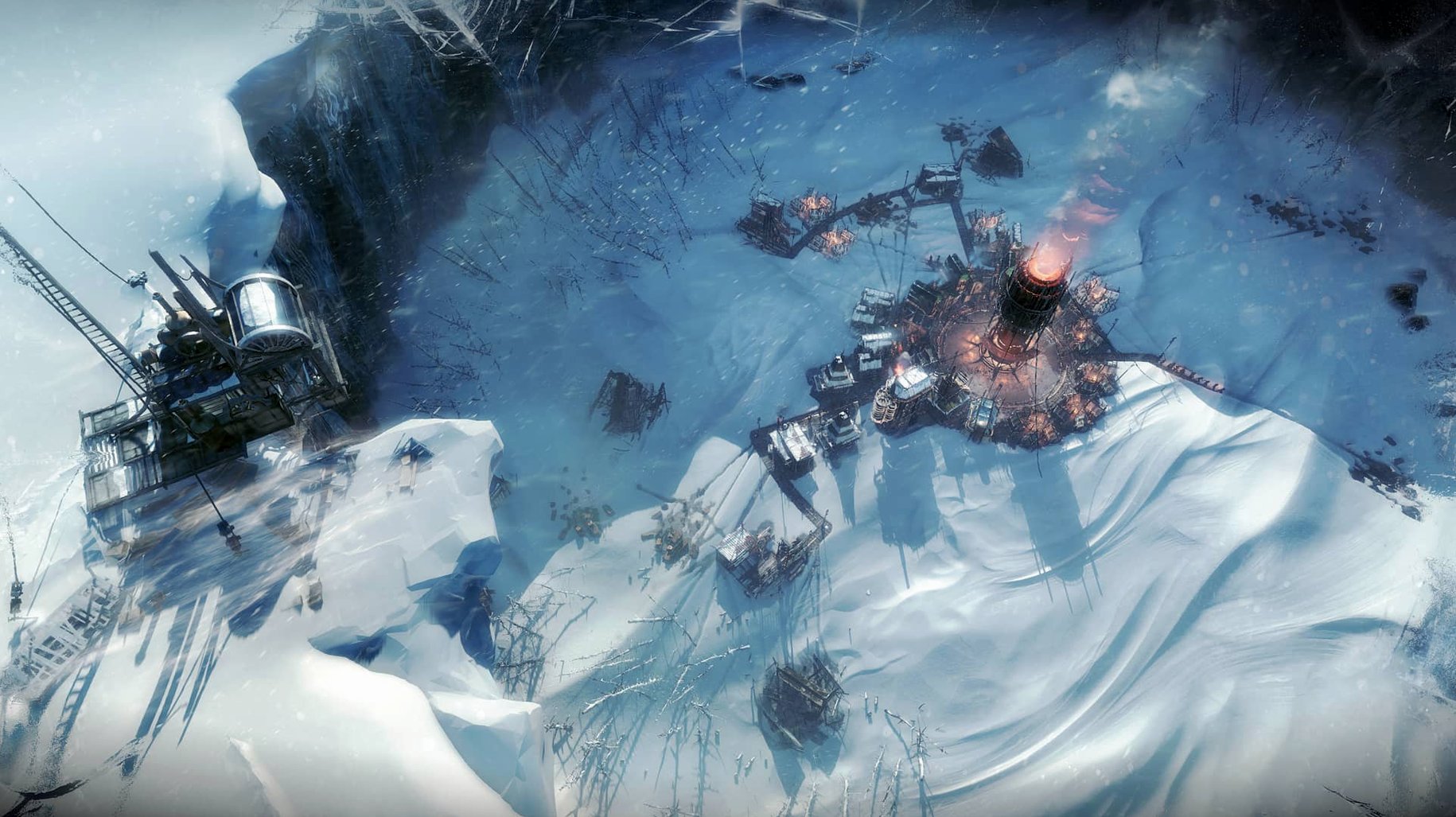
The current version, 1927 (46330), brings the frozen world into sharper focus.
Minute to minute, you're balancing survival decisions. You set work hours, decide how much food goes to each citizen, and choose when to upgrade medical care. The heart of the game is law setting — each decree shapes your society, pushing you toward harsh rule, compassion, faith, or a careful balance. Every choice has a cost, and the temperature keeps dropping.
Beyond the main campaign, endless mode offers eight maps with different landscapes and challenges. You'll develop steam automatons to lighten the load and send airships scouting for resources. The last city on Earth doesn't build itself; you're the one who keeps the generator running and the people hopeful.
Law decisions and resource tracking now feel clearer
The most noticeable shift in this version is how the game handles law decisions and resource tracking. Earlier builds sometimes left you guessing whether a new decree would lock you out of other options — the current version makes the trade-offs clearer before you sign the law. When you hover over a law candidate, the interface now shows which laws become unavailable, so you can plan your society's path without surprises.
The endless mode maps also received attention. The three variants — Endurance, Builders, and Serenity — now display their starting conditions more plainly. Before committing to a map, you can see the landscape type, the weather severity range, and the special challenge attached to it. This helps you choose a match for the kind of session you want: a punishing survival fight, a construction-focused game, or a calmer building experience.
Expedition feedback feels tighter. When your scouts return from outside the city, the report screen lists resources and survivors without extra clicks. The system also remembers your last expedition destination on each map, so you can send repeat trips to known locations more quickly. Small improvements, but they add up over a long session.
How I build a city from a frozen generator to survival
I usually begin a new game by picking an endless mode map. The generator sits in the center of a frozen landscape, and around it are scattered piles of coal, wood, and steel. The first minutes are about placement: I build tents near the generator for warmth, set up a gathering post, and assign workers to the resource piles. The game starts with a small population, so every person matters.
By day three, the food supply starts running low. I open the law book and sign the first decree — child shelters, which lets children help with gathering but keeps them away from the most dangerous jobs. A choice like this costs nothing now but limits my options later. I also research a better heater for the generator, spending coal I had saved for emergencies.
The mid-game shifts to automation. I build my first steam automaton and assign it to the coal mines. It works through the night, which humans cannot do without penalties. This frees up workers for other tasks, but automatons require research and steel. I send an expedition north, hoping to find survivors or a cache of resources. They return with a group of refugees and news of a frozen supply depot nearby.
By the late stage, the temperature has dropped again. I sign the law for extended shifts, pushing work hours longer. Morale dips, but the generator stays on. I keep balancing: more automatons mean fewer unhappy people, but they also reduce the sense of community. The game never tells you the right answer. You just live with the consequences.
Pausing to plan when weather turns or new laws appear
The game lets you pause at any moment. When the weather turns or a new law becomes available, I pause, read the options carefully, and plan my next moves without the clock running. This is especially useful in endless mode, where conditions change faster than the main campaign.
The build menu groups structures by function — heat, food, shelter, industry. Once you know the layout, you can queue buildings quickly. The game also highlights which structures are within the generator's heat zone, shown as a blue circle on the ground. If a building sits outside that circle, its efficiency drops and workers get sick faster.
The law book is organized into branches. Each branch has a visible progression: you see the next law in line, the one after that, and the final decree at the end. This lets you plan a path without memorizing the tree. I often check the law book before a shift change to see if a new decree will help with the current crisis.
Why the main campaign should come before endless mode
Start with the main campaign before trying endless mode. The campaign teaches the mechanics step by step, introducing laws, research, and expeditions at a steady pace. Endless mode assumes you already know these systems and can handle them simultaneously.
When you first load a saved game, take a moment to check the resource panel at the top of the screen. It shows current stockpiles, daily income, and daily consumption. A common early mistake is to run out of coal overnight — the panel helps you see the trend before you close the game for the day.
Use the map exploration feature early. Sending a scout team to the nearest visible point often reveals abandoned supplies or a small group of survivors. The earlier you expand your reach, the more resources you have when the cold deepens.
Keep an eye on the discontent and hope meters. A low hope meter triggers events that reduce efficiency or cause people to leave. If discontent climbs too high, citizens may refuse your orders. I find it helpful to sign a faith or rule decree before the situation becomes critical, not after.
Finally, do not hesitate to restart a city after the first few attempts. The game rewards learning from failure. Each restart teaches you something about resource timing or law sequencing that makes the next city stronger. After a few tries, you will start recognizing the early warning signs of a failing settlement and know how to react.
- macOS 10.15 or later
- Intel architecture
- 2.6 GHz Intel Core i7 processor
- 16 GB RAM
- 10 GB available storage
- 4 GB AMD Radeon Pro 5300M, Radeon Pro 560X, or better
Questions I keep getting
What Mac do I need to run Frostpunk?
You need macOS 10.15 or later, an Intel Core i7 at 2.6 GHz, 16 GB RAM, and a Radeon Pro 5300M or better. Apple Silicon works through Rosetta, but the minimum specs are Intel.
Is there an endless mode with different maps?
Yes, endless mode includes eight maps, each with unique landscapes, weather patterns, and challenges to keep you on your toes.
Can I play Frostpunk in languages other than English?
The game supports Russian, English, German, Spanish, Italian, Simplified Chinese, Korean, Polish, Portuguese, Turkish, and French as interface languages. English is the only voice language listed.
How to install
- Run the downloaded package to start the installer.
- Follow the standard installation steps — it's straightforward.
- Choose where you want the game installed when prompted.
- Pick Applications as the destination for easy access.
Similar games






Sign in or join the club to leave a comment.
Nobody has commented yet.