
- Version
- 8.4.3.8984
- Studio or maker
- Fontlab Ltd
- Languages
- English
- Activation
- K'ed by TNT team
- Runs on macOS
- macOS 10.14 or later
- Chip type
- Intel 64-bit
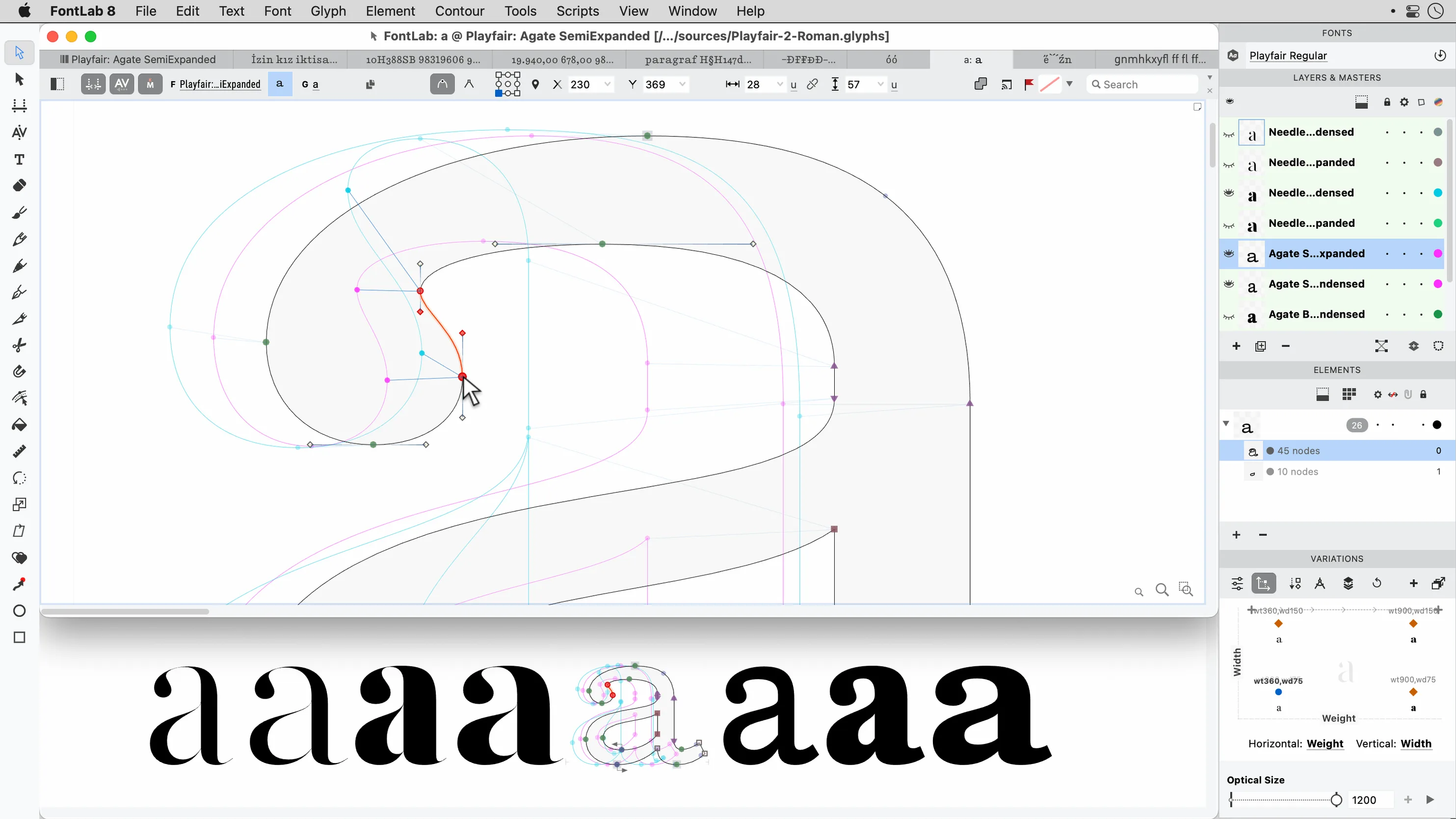
You've just downloaded FontLab 8 and you're about to install it. Here's a quick walkthrough of what to expect.
- Check your Mac. FontLab 8.4 runs natively on both Intel and Apple Silicon Macs, and works with macOS 10.15 through macOS 26 Tahoe. So whether you're on an older Intel iMac or the latest M-series, it should feel at home.
- Open the disk image. Double-click the .dmg file you downloaded. You'll see the FontLab icon and an Applications folder alias.
- Drag FontLab into the Applications folder. This copies the app to where macOS expects it. The alias makes it easy.
- Launch FontLab from Launchpad. Once the copy finishes, open Launchpad, find FontLab, and click. That's it.
After installation, you'll find a full font editor that supports Unicode, editable code pages, and TrueType AAT fonts. It also imports AI, EPS, TIFF, and BMP files, and gives you more than 200 undo levels. Batch transformation of glyphs is built in, which saves time when you're adjusting a whole family. The built-in viewer and editor let you preview changes without leaving the app.
My font file appears but won't open
FontLab 8 is a stable tool, but a few things trip people up during their first few sessions. Here are the ones I see most often and what usually fixes them.
- The font file appears but won't open. This usually happens with older Type 1 fonts or corrupted TrueType files. Try importing the file instead of opening it directly: drag the font into the FontLab window, or use the import option for AI, EPS, or TIFF versions if you have them. If the file came from an online source, re-downloading it sometimes clears the problem.
- Changes don't show in the preview pane. The viewer and editor are separate panels. Make sure you're looking at the right glyph in the viewer after editing. A quick refresh is to click a different glyph and then return to the one you changed. The 200-level undo stack is your friend here — you can step back and see where the display stopped updating.
- Batch transformations don't apply to all selected glyphs. Beginners often select glyphs in the font grid but forget to confirm the selection before applying the transformation. Select your glyphs, then use the batch tool. If nothing happens, check that you haven't accidentally filtered the glyph set by Unicode range or code page; the batch tool only acts on what's visible.
Ignoring the undo habit from simpler apps
FontLab is a professional tool, and a few habits that work in simpler apps don't carry over well. I've watched students at the game club try font editing for fun, and these patterns keep coming up.
- Ignoring the undo stack. With over 200 undo levels, there's little reason to save a separate version every few minutes. New users sometimes panic and close the app when a glyph looks wrong, losing work that could have been undone. Get into the habit of pressing undo before reaching for the close button.
- Overlooking vector drawing tool basics. The vector tools are precise, but they behave differently from what you might expect in a drawing app. The key is to place anchor points deliberately, not freely. Beginners often click too many points, creating bezier curves that are hard to tame. Fewer, well-placed points make cleaner fonts.
- Skipping the encoding check. FontLab supports editable code pages and encodings, which means you can assign a glyph to the wrong slot if you're not careful. A common mistake is drawing a beautiful 'a' but placing it in the position for 'b'. Before you export, run through your glyph map once to confirm each character sits where it should. Unicode support helps keep things organized, but it only works if you check it.
Directly import AI and EPS files
FontLab 8 doesn't sit in isolation. It works alongside tools you probably already use, and it respects macOS conventions that make font management straightforward.
With vector and design apps. You can import AI and EPS files directly into FontLab, which is useful when you've sketched a letter shape in Adobe Illustrator or Affinity Designer and want to turn it into a proper glyph. Similarly, TIFF and BMP imports let you bring in hand-drawn or scanned artwork. Once your font is ready, export it as OpenType or TrueType and install it through Font Book or a manager like Fonts. The font becomes available system-wide — Photoshop, Pages, even the terminal if you're customizing terminal fonts.
With the macOS file system. FontLab uses the standard .dmg installer, so it follows the same drag-to-Applications pattern you know from other pro apps. It doesn't scatter files across folders. If you keep your font projects in a dedicated directory and let FontLab save its project files there, you can back up or sync them with Dropbox or iCloud Drive without special handling.
For Arabic and Hebrew work. FontLab supports Arabic and Hebrew scripts, which is not something every font editor handles natively. If you're designing a bilingual typeface, you can switch encoding within the same project. This is a feature graphic designers and studios often look for, and it works without extra plugins or scripts.
For production pipelines. Programmable font transformations let you script repetitive adjustments. This is where FontLab becomes more than an editor — you can treat it as part of a type production pipeline. If you're working on a large family with multiple weights, write a transformation once and apply it to every font file in the set. The batch glyph transformation tool handles the rest.
- FontLab 8.4 includes 500 improvements over version 8.
- Compared to FontLab 7, version 8.4 brings 900 improvements.
- macOS 10.14 or later
- Intel or Apple Silicon
Questions I keep getting
Does FontLab 8 run on Apple Silicon Macs?
Yes, FontLab 8.4 runs natively on both Intel and Apple Silicon Macs.
What macOS versions are supported?
FontLab 8.4 works on macOS 10.15 through macOS 26 Tahoe.
How to install
- Open the downloaded disk image.
- Drag the FontLab app into the Applications folder alias.
- After the copy finishes, open FontLab from Launchpad.
Similar apps



Sign in or join the club to leave a comment.
Nobody has commented yet.