
- Version
- 2.8m
- Studio or maker
- Claudio Norori, Antonio Vargas
- Languages
- Russian, English, Spanish, Italian
- Activation
- Not required
- Chip type
- Intel 64-bit
- Tried out on
- macOS Tahoe, Mac mini 2024 M4
- First released
- 15.02.2022
- Voice languages
- Music only
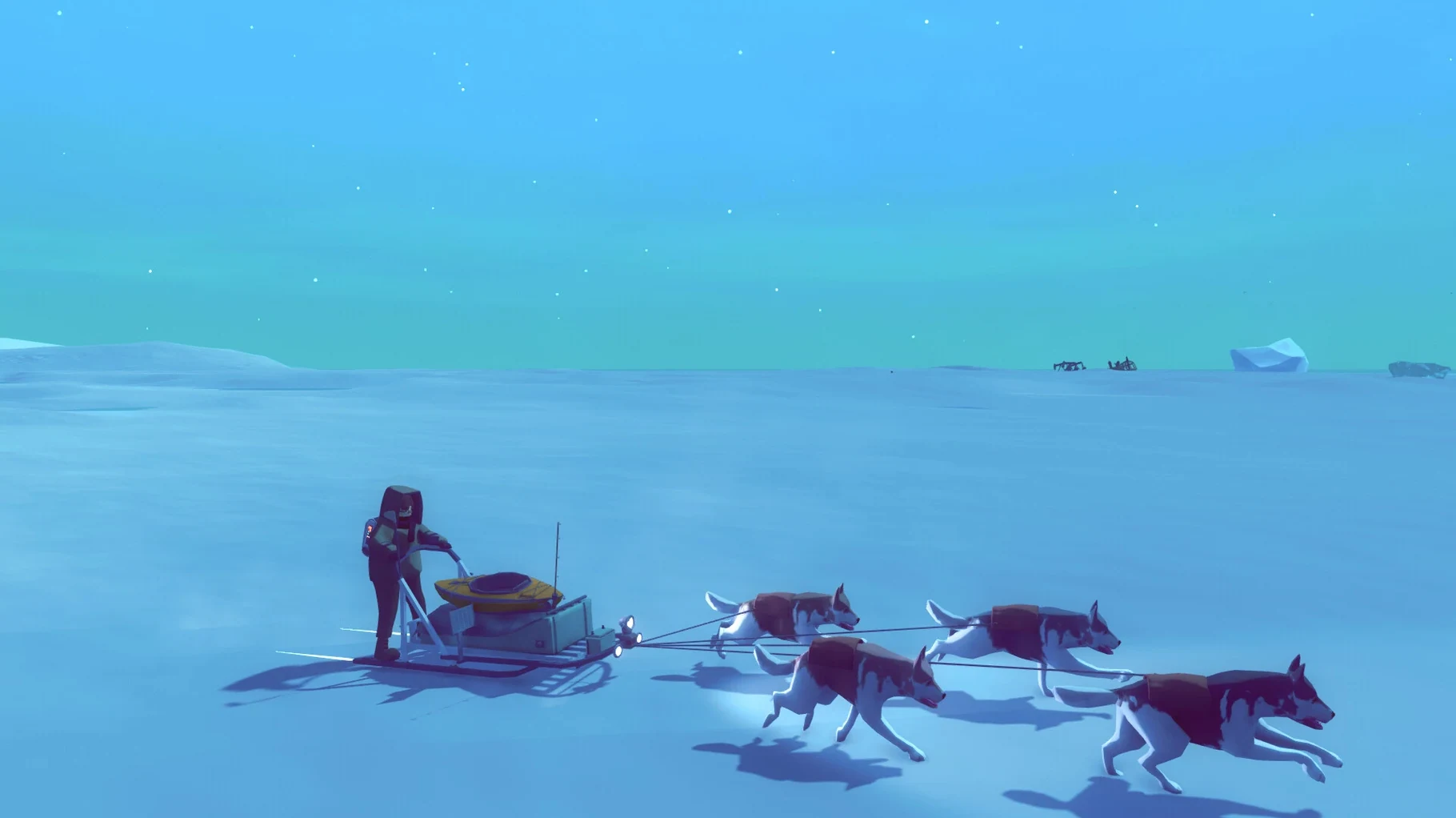
If you’ve spent time with base-building games that lean hard on combat, Arctico offers a deliberate change of pace. It’s a peaceful exploration and base-building game about recovering a late mentor’s work on an island. For an experienced player, the deeper satisfaction comes from the systems beneath the quiet surface.
Managing a research economy and multiplayer dog sleds
- Resource flow and experiment loops. Collecting materials, running experiments, and selling plant seeds create a steady cycle. You’re not just building; you’re managing a small research economy.
- Dog sleds and multiplayer. Up to three friends can join, and the sleds have their own upgrade path. The movement and logistics matter more when you coordinate with others.
- Multiple location exploration. The island has several distinct areas. The x86 64-bit build runs well on an M4 Mac mini under macOS Tahoe, so loading between zones is quick.
- Structure and sled improvements. The upgrade tree for buildings and vehicles isn’t deep, but it’s tight. Every choice nudges your base toward a different efficiency.
Interface languages include Russian, English, Spanish, and Italian, which makes it easy to recommend to a multilingual club. The peaceful tone and the mentor’s story give the resource loops a purpose beyond pure expansion.
Adjust camera sensitivity and other feel options
Before you settle into the island, open the options and adjust a few things that affect how the game feels over a longer session.
- Camera sensitivity. The default pan speed can feel slow when you’re scanning the horizon for resources. Bump it up a notch if you find yourself dragging the mouse across the whole desk.
- Audio balance. The soundtrack is listed as the primary sound language, and it does a lot of atmospheric work. I turn the music up a little and keep effects at a medium level so footsteps and crafting sounds don’t get lost.
- Display resolution. The game scales well on Retina screens, but on an older Intel Mac with macOS 10.9.3 it can look sharper if you match it to your screen’s native resolution rather than letting it choose automatically.
Fixing experiment progress and other Mac snags
A few things tripped me up when I first ran Arctico on the Mac mini. They’re easy to fix once you know what to look for.
- Experiment progress stops. If your research isn’t advancing, check whether you’ve actually assigned the right resources. The interface doesn’t always show clearly that a material is missing. Open the experiment panel and confirm each slot is filled.
- Dog sled gets stuck on terrain. The sleds can clip into rocks or trees in a few spots on the island. Instead of fighting the controls, get off, walk a few steps away, and call the sled again. It usually respawns in a clear area nearby.
- Multiplayer invites don’t appear. This happened a couple of times during our club sessions. The fix: make sure all players are on the same network version. If one person updated to 2.8m and another didn’t, the game won’t show the invite. Check the version number in the main menu before connecting.
Scout the zone before building your first base
Starting a fresh base can feel sprawling. Here’s a sequence that avoids backtracking and keeps resources flowing from the first hour.
- Scout the nearest zone thoroughly. Before you build anything, walk the entire area around your starting point. Mark where wood, stone, and any plantable seeds are. Knowing the resource clusters saves running back and forth later.
- Build a small shelter and one experiment station first. You don’t need a full compound yet. A roof keeps your character safe from the weather, and the station lets you start processing the first seeds you found. The sooner an experiment runs, the sooner you get data to sell for new tools.
- Upgrade the sled before expanding the base. A faster sled with more cargo space lets you haul bigger loads from distant locations. That cuts the time you spend on transport, which means more time for exploration and research.
- Plant your first crops near the station. Crops need regular attention, so keep them close. Once they start producing, you have a steady source of seeds to sell and materials to feed further experiments.
- Then expand outward. Only after the sled and the first crops are running smoothly should you add new rooms, storage, or decorative elements. By that point, the resource loop is stable enough to support growth without sudden shortages.
If you’re playing with friends, divide roles early: one person handles sled runs, one manages experiments, and one scouts new areas. It keeps everyone busy and avoids the “what should I do” pause that can slow down a co-op session.
- macOS 10.9.3 or later
- Intel processor
- 4 GB RAM
- 1 GB available storage
How to install
- Open the downloaded disk image to mount it.
- Drag the app to your Applications folder.
- After the copy finishes, open the app from Launchpad.
Similar games






Sign in or join the club to leave a comment.
Nobody has commented yet.