- Version
- 1.13
- Studio or maker
- Utopia Software
- Languages
- English
- Activation
- Not required
- Chip type
- Apple Silicon, Intel 64-bit
- Tried out on
- macOS Tahoe, MacBook Pro (M3 Max. 2023)
- First released
- 1.12.1997
- Voice languages
- English
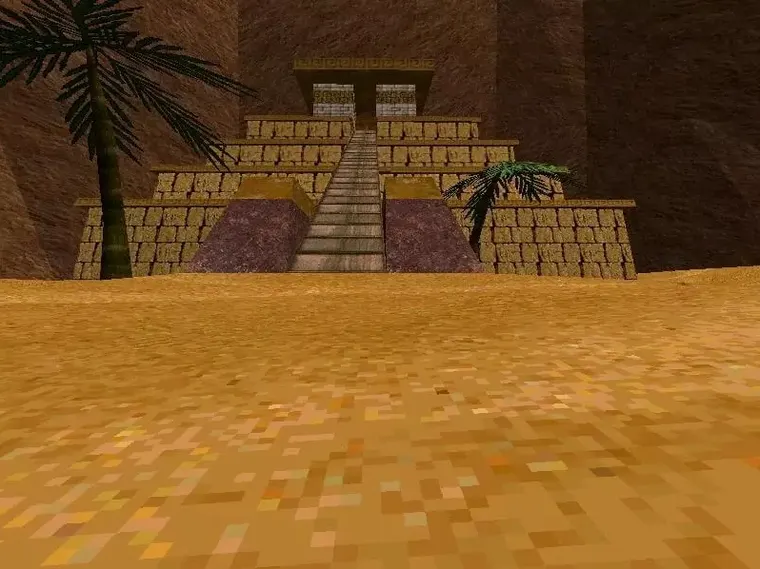
The grappling hook might be the first thing you notice, but the real star of Montezuma's Return is how it turns a 1997 action-adventure into a series of small decisions. Each room asks a question: do you time the jump over the fire pit, or find the key to unlock a safer route? The answers come through exploration, not brute force.
You play Max Montezuma, a descendant of an Aztec emperor, who must restore his ancestor's desecrated tomb. That means moving through more than 150 rooms filled with spiders, snakes, scorpions, and ancient guardians. The first-person perspective gives each corridor a personal feel, and the rolling skulls keep you honest when you think you've found a quiet corner.
The puzzles follow a clear logic. Doors open with keys, and keys hide behind traps or enemy patterns. There is no random difficulty; the game teaches you one mechanic at a time. That pacing makes it a good fit for anyone who likes retro platformers but wants something slower than a modern twitch game.
Version 1.13 runs natively on both Apple Silicon and Intel Macs, so the old pixel art and chunky sound effects carry over without emulation fuss. It is a direct sequel to Montezuma's Revenge, but you do not need to have played the original to enjoy this one.
Start with the crash sequence and find the way forward
The game starts with the crash sequence, and within a minute you are standing in the first room of the ruins. The immediate task is to figure out which way is forward. In an early session, I spent the first ten minutes simply looking: a key sits on a ledge, a door waits at the far end, and a rope hangs just out of reach. The trick is to map the room's threats before moving. Spiders patrol in short loops; fire pits pulse at a steady rhythm. Once you see the pattern, the platforming becomes a matter of timing, not speed.
I usually work room by room. Find the key, open the door, collect whatever treasure sits behind it, and note the exit for later. Some rooms loop back on themselves, so a key you find in room twelve might open a shortcut to room three. That interconnected layout rewards a slow, thorough approach. After about twenty minutes, I reach a room with a rolling skull and a disappearing platform. That is where the game asks for a little more precision. I died twice there before learning to wait for the skull's bounce pattern. The game does not punish you harshly; you restart at the room entrance, not the beginning of the whole level.
Works on both Apple Silicon and Intel Macs
The Mac version 1.15 runs on both ARM and x86 64-bit architectures, so it works on Apple Silicon and Intel Macs alike. It was tested on macOS Tahoe, though earlier versions of macOS should handle it too given the game's age and the build's straightforward structure. The app requires no activation, so after dragging it to the Applications folder you can launch it straight from Launchpad. There is no installer waiting in the background, nothing to configure. The disk image contains only the app and a small support folder.
Drag the disk image to Applications and launch from Launchpad
Start by opening the disk image and dragging the app to the Applications folder as instructed. Once the copy finishes, launch it from Launchpad. The game loads straight into the main menu with no splash screens or login prompts.
For the first session, give yourself thirty minutes to adjust to the first-person perspective and the pacing. The controls are simple, but the camera movement in the old engine takes a moment to feel natural. Move slowly in the early rooms. Watch the enemy patrols before jumping. The game is generous with its save system, but rushing into a room with a rolling skull without studying its path will cost you time.
After the first few rooms, you will notice the game's pattern: every new hazard appears alone before it combines with others. A room with only fire pits teaches you the jump timing. A later room adds a spider to that same fire pit layout. By the time you face both at once, you already know each element. That structure makes the difficulty curve feel fair rather than punishing.
One practical note: keep the original disk image on your drive until you have confirmed the game runs and you have made a backup of the save folder. The save data is small, and having a clean copy of the app means you can always start fresh if something goes wrong with a mod or a settings tweak later.
- macOS version: not specified
- Architecture: Apple Silicon and Intel (x86 64-bit)
- Interface languages: English
Questions I keep getting
How many rooms are in Montezuma's Return?
The game includes more than 150 rooms, each with its own layout of enemies, keys, and traps.
What kind of enemies will I face?
You will encounter spiders, snakes, scorpions, and ancient guardians as you explore the ruins.
Does the Mac version work on both Intel and Apple Silicon?
Yes, version 1.13 supports both ARM and x86 64-bit architectures, so it runs on any modern Mac.
How to install
- Open the downloaded disk image to mount it.
- Drag the app to the Applications folder shortcut. This keeps the game in the standard Mac location.
- After copying finishes, launch the app from Launchpad. The first start may take a moment.
Similar games




Sign in or join the club to leave a comment.
Nobody has commented yet.