- Version
- 1.26
- Studio or maker
- Murudai
- Languages
- English
- Activation
- Not required
- Chip type
- Intel 64-bit
- Tried out on
- macOS Sonoma, MacBook Air (M1. 2020)
- First released
- 17.06.2011
- Voice languages
- Music only
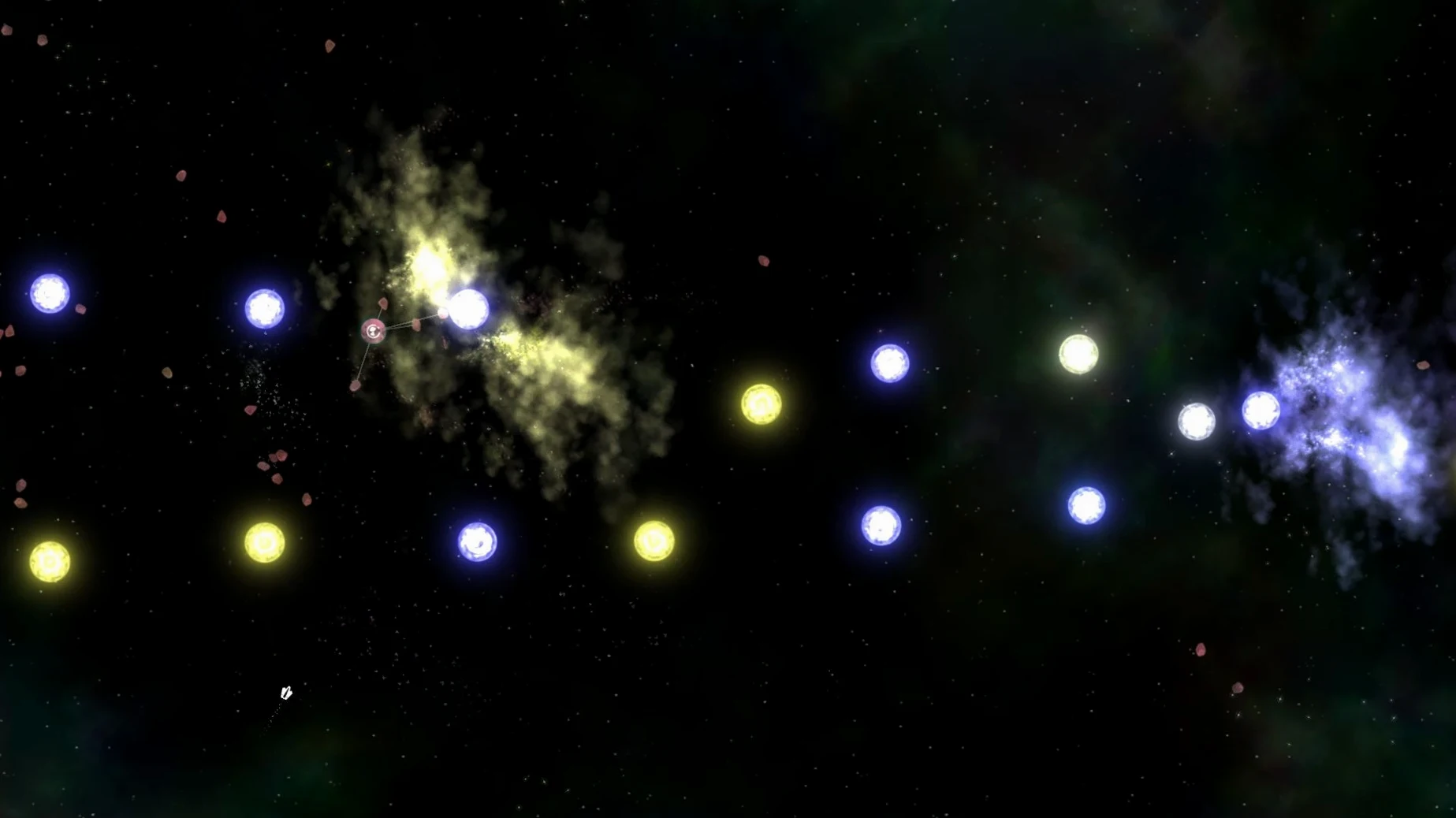
The game’s first feature you notice is the freedom to control a celestial body. You start small, maybe a single asteroid, and grow by absorbing mass or stealing planets from other systems. What makes Solar 2 stand out is how it sits alongside your usual Mac tools — it’s a sandbox you can dip into for ten minutes or an hour, without needing to learn complex controls. The abstract universe feels infinite, and the soundtrack keeps things calm until you choose to attack enemy life in space battles.
How it plays on an Intel Mac today
Solar 2 is a 64-bit x86 build, so it runs natively on Intel Macs. I tested it on a MacBook Air (M1, 2020) under macOS Sonoma and it worked through Rosetta 2 without issue. The mechanics are straightforward: nurture life on planets, use orbiting objects as wrecking balls, or just drift and watch the stars. The 2011 release date shows in its simple graphics, but the gameplay loop holds up well.
Classroom and personal use
At the after-class game club, Solar 2 fits a slot where students explore cause and effect — how gravity works, how systems interact. For personal downtime, it’s a low-pressure game that rewards patience. The English-only interface is fine since there’s little text to read. If you have an Intel Mac, this is a straightforward sandbox that complements the other apps on your machine.
Shows orbital interactions for physics students
Solar 2 appeals to Mac users who like open-ended play without a fixed goal. Maths teachers and physics enthusiasts find the gravitational mechanics useful for showing orbital interactions in a relaxed way — students can observe what happens when you grow a system or collide with objects. The sandbox nature also suits creative players who prefer building and experimenting over competition. If you enjoy games where you set your own pace, this is one to keep nearby. For action players, the space battles and the ability to attack enemy life add a layer of challenge when you want it, but you never have to engage.
Steal planets from other systems more reliably
The most notable improvement in version 1.26 is the ability to steal planets from other systems more reliably. Before this update, the mechanic felt a bit unpredictable — now it works as you would expect, making system expansion feel more deliberate. Nonlinear tasks also became smoother to manage, so you can switch between nurturing life, causing chaos, or completing objectives without losing progress. The soundtrack remains unchanged, which is fine because it already matched the abstract universe well. These updates keep the experience consistent for Mac users returning after a break, and the install steps (open the disk image, drag the app into the Applications folder alias, then open from Launchpad) stay the same as before. Solar 2 is a physics sandbox game where you grow a star and consume planets.
- macOS (any version that supports 64-bit x86 apps)
- Intel processor (runs on Apple Silicon via Rosetta 2)
- Interface language: English
Questions I keep getting
Does Solar 2 run on Apple Silicon Macs?
Yes, it runs on Apple Silicon via Rosetta 2, since it is a 64-bit x86 build. It was tested on a MacBook Air (M1, 2020) with macOS Sonoma.
How to install
- Open the downloaded disk image file.
- Drag the Solar 2 app icon into the Applications folder alias inside the disk image.
- Once the copy finishes, open the app from Launchpad.
Similar games




Sign in or join the club to leave a comment.
Nobody has commented yet.