- Version
- 1.7.3
- Studio or maker
- XLN Audio
- Languages
- English
- Activation
- K'ed by TEAM HCiSO
- Runs on macOS
- macOS 10.13 or later
- Chip type
- Apple Silicon, Intel 64-bit
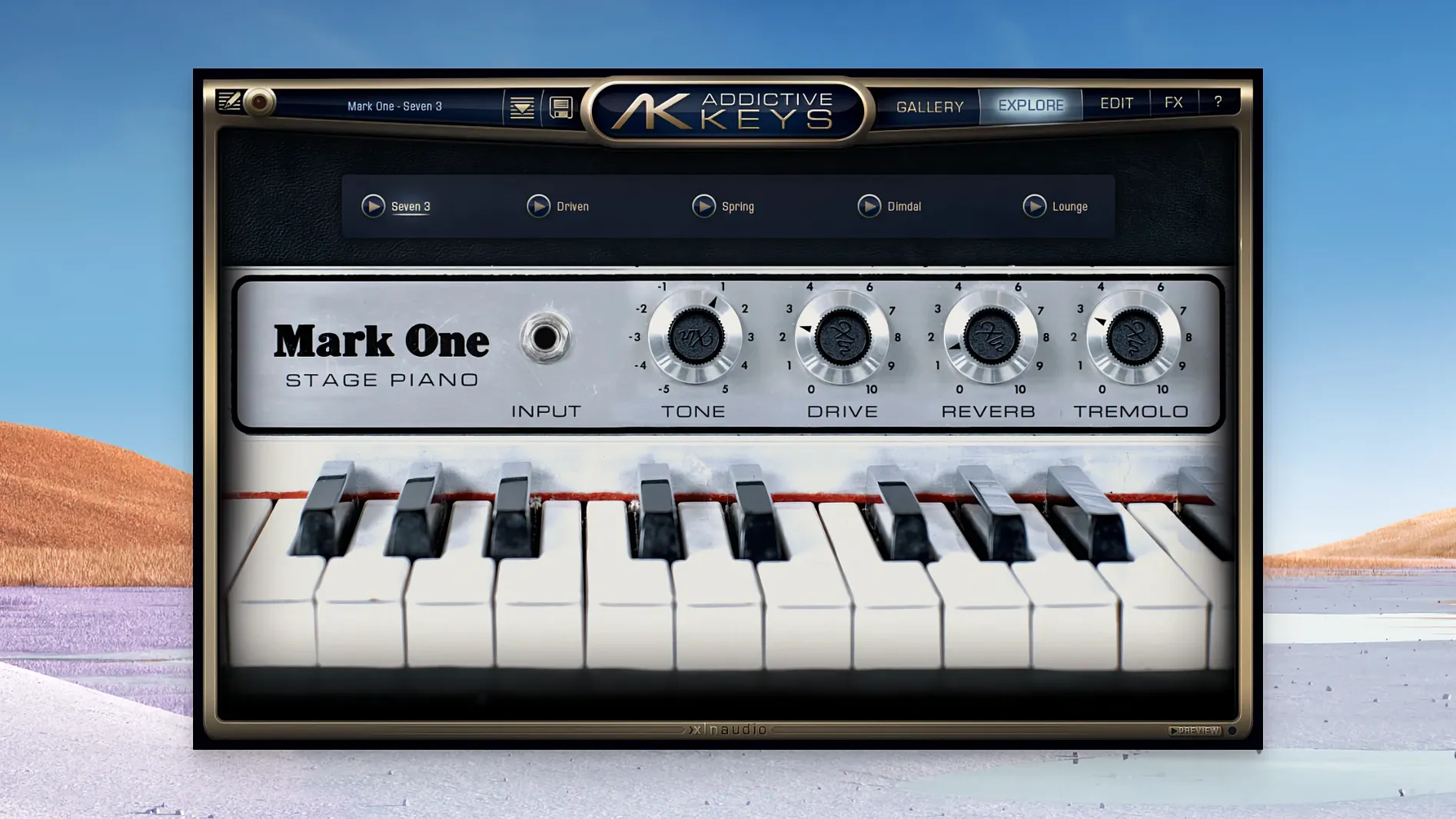
Songwriters and producers reaching for a believable piano sound often find Addictive Keys waiting in their plugin list. It is a virtual keyboard instrument built for music production, with four distinct pianos that cover most session needs without a lot of fuss.
The Modern Upright, based on a Yamaha U3, works well on a vocal track or an acoustic ballad. The Studio Grand offers a fuller, more polished tone for pop or rock arrangements. If you want something with character, the Mark One (a Rhodes Mk. 1) and the Electric Grand (a CP-80) sit nicely on a bus, adding warmth or a subtle shimmer behind a chorus.
Each instrument comes with production-ready presets, so you can drop it on a track, pick a sound, and keep moving. The pianos were recorded with a mix of modern and vintage gear, which gives them a natural, slightly imperfect feel that sits well in a mix. Whether you are sketching a demo or finishing a master, Addictive Keys has a place.
For singer-songwriter and pop producers who need preset browsing by mood
The plugin appeals to a wide range of Mac users, but a few groups tend to get the most mileage from it. Producers working on singer-songwriter or pop material will appreciate the preset workflow, where you can browse by mood or instrument type without digging through sample libraries. The presets are ready to go, so you spend time arranging, not tweaking.
Keyboard players who also produce — the kind of person who plays piano but doesn't love wrestling with sample instruments — will find the Mark One and Electric Grand especially useful. These two pianos have the character of real vintage instruments but load fast and take up less mental space than a full sample library. You can play them in real time without worrying about latency or disk streaming issues.
Mixing engineers who occasionally need to add a piano part during a session also benefit. If you are working on a rock or folk mix and the recorded piano needs a layer of warmth, Addictive Keys lets you drop in a second piano sound quickly, blend it, and move on. You do not need to be a keyboard virtuoso to get a usable part.
Newer producers, especially those working in GarageBand or Logic, will find the standalone mode helpful. You can practice or write without opening a full project, then load the same instrument inside your DAW later. The learning curve is low, which matters when you are still building confidence.
How a songwriter on an older MacBook Pro replaced a clunky sampled upright
Picture a songwriter who records demos at home on an older MacBook Pro. They write mostly acoustic ballads and indie pop, with piano as the main instrument. Before Addictive Keys, they tried a free sampled upright, but it had mechanical noise that never sat right in the mix, and loading took thirty seconds each time.
They install the Complete Collection and start with the Modern Upright. The first preset, something called "Natural Upright," sounds like a real room recording. They play a verse-chorus progression, and it fits without EQ. Later, they add the Electric Grand on the bridge section, which cuts through the arrangement without overpowering the vocal. The whole track comes together in under an hour, and nothing needed tweaking beyond a volume adjustment. That is the kind of workflow Addictive Keys is built for.
What disk space each piano instrument requires before you install
How much disk space does it use? The Complete Collection installs four instruments, each with multiple mic positions and velocity layers. The exact size depends on your download, but expect a few gigabytes per instrument. You can install individual pianos if you only need one or two.
Does it work with Logic Pro or Ableton Live? Yes. The plugin supports VST, VST3, AU, and AAX formats, so it works with Logic, Ableton, Cubase, Pro Tools, Studio One, and most other DAWs. The AU version is the easiest choice for Logic users.
Can I use it without a DAW? Yes. The manual describes a standalone mode, which runs the instrument on its own. You plug in a MIDI keyboard, open the app, and play. Good for practice, writing away from your DAW, or testing sounds before committing to a project.
Is it resource-heavy? The plugin loads relatively fast, and the developers optimized it for both Intel and Apple Silicon Macs. It runs on macOS 10.13 or later, and it uses the modern plugin formats, so it should work on recent Macs without trouble. Like any sample instrument, it will use more memory if you load the most complex presets with all mic positions, but the simpler ones stay light.
How do I install it on a Mac? The process is straightforward: open the downloaded disk image, run the standard installation process, and then authorize the plugin in your DAW. No extra steps, no license manager to fight with.
Why it beats Keyscape for speed and space with four focused pianos
Addictive Keys vs. Spectrasonics Keyscape. Keyscape is a massive library with dozens of keyboards, including collectible and rare instruments. It sounds incredible, but it costs more space and loads slower. Addictive Keys focuses on four well-chosen pianos, which makes it faster to navigate and easier to run on a mid-range Mac. If you need a rare harpsichord or a 1970s suitcase piano, choose Keyscape. If you need a great upright and a Rhodes that work every time, Addictive Keys has you covered.
Addictive Keys vs. Native Instruments The Gentleman. The Gentleman is one of NI's well-regarded upright pianos. It sounds warm and detailed, but it uses Kontakt, which adds another layer of software. Addictive Keys runs as its own plugin, no extra host required. For a classroom or a quick session, that independence matters.
Addictive Keys vs. Arturia Piano V. Piano V is a physically modeled instrument, not a sample library. It gives you deep control over string resonance, hammer hardness, and tuning. That is useful for sound design, but it can sound synthetic if you push it too far. Addictive Keys stays in the recorded, natural camp. You get the sound of a real piano in a real room, not a simulation. Most songwriters prefer the recorded approach for finished tracks.
Each of these alternatives has strengths, but Addictive Keys wins on ease of use, fast loading, and a focused selection of sounds that cover the most common piano roles in modern production.
- macOS 10.13 or later
- Works on both Intel and Apple Silicon Macs
Questions I keep getting
How many pianos are in the Addictive Keys Complete Collection?
The Complete Collection includes all four instruments: Studio Grand, Modern Upright, Mark One, and Electric Grand.
What is the Mark One based on?
The Mark One is based on a Rhodes Mk. 1 stage piano, giving it that classic electric piano sound.
What kind of presets does Addictive Keys offer?
The plugin provides production-ready presets, so you can quickly find a suitable sound for your track without tweaking much.
How to install
- Open the downloaded disk image to mount it.
- Run the standard installer and follow the prompts to complete the setup.
Similar apps
Sign in or join the club to leave a comment.
Nobody has commented yet.